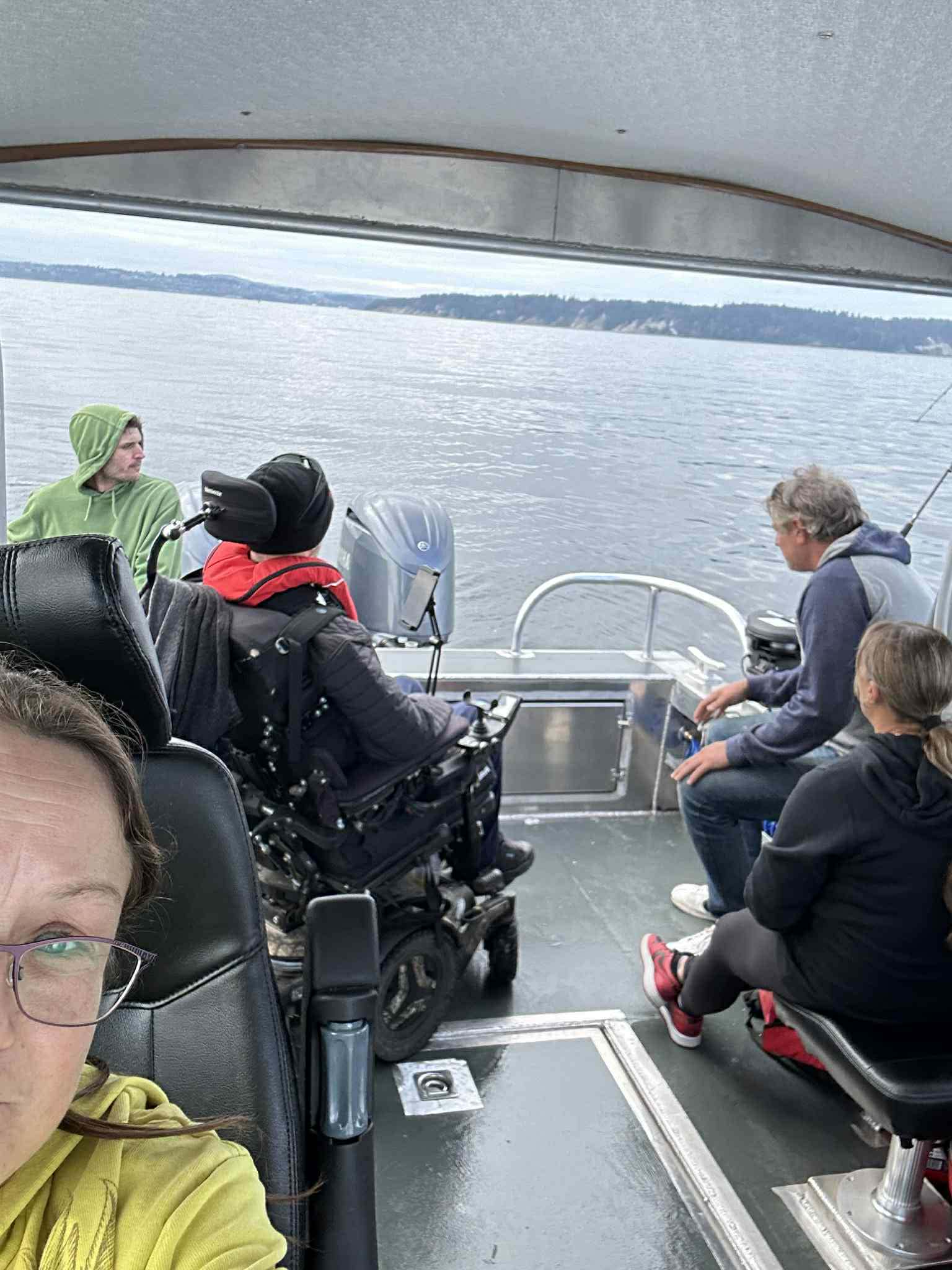
A spinal cord injury changes how you fish — not whether you can. People with injuries from C4 to lumbar are fishing across Canada right now, on charters, from docks, and from adapted boats. This guide covers what's different at each injury level, what equipment helps, and how to get started again.
Why This Guide Exists
Wheelin N Reeling Adventures was literally built for a friend with a spinal cord injury. Cody spent nine months hand-building an accessible fishing vessel after his best friend sustained an SCI. Everything on this page comes from direct experience with SCI anglers — not theory, not marketing. This is what we've learned from putting people back on the water.
Fishing by Injury Level
Every spinal cord injury is different, but here's a general guide to what's possible and what adaptive equipment helps at each level.
C4-C5 (High Cervical / Quadriplegia)
Limited or no hand function. Shoulder and bicep function varies.
Adaptive Setup:
- - Electric reel (push-button operation)
- - Rod mounted in a fixed holder — no need to hold it
- - Universal cuff or wrist brace to stabilize hand on the rod
- - Crew handles bait, hooks, casting, and netting
- - On a charter: trolling eliminates the need to cast entirely
Can you fish? Yes. The crew does the setup. You feel the strike and fight the fish with assistance.
C6-C7 (Mid Cervical / Quadriplegia)
Wrist extension present. Some grip possible (tenodesis grasp). Can often push a manual wheelchair.
Adaptive Setup:
- - Foam grip build-up on rod handle
- - Velcro wrist strap to secure hand to rod
- - Spinning reel (easier to operate than baitcaster)
- - Rod holder for resting between fights
- - May be able to cast with adapted technique (side cast)
Can you fish? Yes. Many C6-C7 anglers fish semi-independently with adapted grips and rod holders.
T1-T6 (High Thoracic / Paraplegia)
Full arm and hand function. Trunk stability limited. Core balance affected.
Adaptive Setup:
- - Standard rod and reel — full hand function means standard gear works
- - Chest strap or seat belt for trunk stability when fighting a big fish
- - Rod holder for hands-free periods
- - Wheelchair tie-downs on a boat for safety underway
- - Can cast, reel, bait hooks, and net fish independently
Can you fish? Absolutely. Full upper body function means you fish just like before — you're just sitting.
T7-T12 (Low Thoracic / Paraplegia)
Full arm function. Increasing trunk stability. Some abdominal function.
Adaptive Setup:
- - Standard gear, standard techniques
- - May not need any adaptive equipment at all
- - Better core stability makes fighting large fish easier
- - Wheelchair tie-downs on a boat
- - Can manage everything independently
Can you fish? You can do everything you did before. The only adaptation is the wheelchair.
L1-L5 (Lumbar / Paraplegia)
Full upper body. Some hip flexion. May have partial leg function.
Adaptive Setup:
- - Standard gear, no adaptations needed
- - Some L-level injuries allow standing with braces — standing rod holders exist
- - Full trunk control for fighting fish
- - May be able to transfer to boat seat if preferred
Can you fish? Fully. Many L-level anglers fish with zero adaptive equipment.
Not Just Spinal Cord Injuries
While this guide focuses on SCI, wheelchair users with other conditions fish successfully too:
Multiple Sclerosis
Fatigue management is key. Plan for rest breaks, bring shade, stay hydrated. Avoid hot days — heat sensitivity is common. Shorter trips (4 hours) often work better.
Cerebral Palsy
Adapted grips and rod holders help with spasticity. Electric reels reduce fatigue. Positioning and seating support make long trips comfortable.
Amputation
Upper limb: one-handed casting is very doable with spinning reels. Lower limb: standard fishing from a wheelchair or adaptive seat. Prosthetic-friendly setups available.
Muscular Dystrophy
Electric reels and rod holders are essential. Lighter rods reduce fatigue. Charter fishing (trolling) minimizes physical demands while maximizing the experience.
Health Considerations on the Water
Autonomic Dysreflexia (T6 and Above)
Know your triggers. Sun exposure, full bladder, tight clothing, and temperature changes can all trigger AD on the water. Bring your emergency kit. Make sure your companion and the crew know the signs (sudden headache, flushing above injury level, high blood pressure).
Temperature Regulation
SCI affects your body's ability to regulate temperature below your injury level. On the water, wind and spray cool you faster than you realize. Layer up. Bring a blanket for your legs. In summer, sunscreen is critical on areas with no sensation.
Pressure Management
A 5-hour charter means 5 hours in your chair. Bring your pressure-relief cushion. Set a timer for weight shifts. If you need to do a more significant pressure relief, let the crew know — they can help adjust your position.
Bladder Management
Plan your catheter schedule around the trip. Do a cath before boarding. Bring supplies for at least one on-water cath if needed. Our vessel has an on-board washroom. Let the crew know your needs — they've seen it all and will give you privacy.
The Mental Side
Let's be real: the first time back on the water after an SCI is emotional. Maybe you fished your whole life. Maybe you're terrified it won't feel the same. Maybe you've been told you "can't do that anymore."
Here's what we've seen: the moment the boat clears the harbour and you feel the ocean under you again, something clicks. The reel screams, a fish is on, and your body remembers what to do. The injury didn't take this from you. You just needed someone to build the way back.
If you're hesitating — book the trip. The worst that happens is you have a good day on the water. The best that happens is you rediscover something you thought was gone.
How to Get Started
Start with a charter
A guided charter eliminates the gear, boat, and logistics challenges. You show up, they handle everything. It's the easiest way to test the waters (literally).
Try a short trip first
A 4-hour crabbing or sightseeing trip is lower pressure than a full-day fishing charter. See how your body handles the boat before committing to a long day.
Bring someone you trust
A friend, partner, or caregiver who knows your body and your needs. Caregivers ride free on most accessible charters.
Tell the charter everything
Injury level, chair type, what you can and can't do, medical considerations. The more they know, the better they prepare.
Don't compare to before
You might fish differently now. Maybe you use a rod holder. Maybe the crew helps with the net. That's not less fishing — it's adapted fishing. The fish doesn't know the difference.
We Built This Boat For You
Our vessel exists because of a spinal cord injury. Every detail — the ramp, the deck, the tie-downs — was designed for wheelchair users by someone who watched his best friend go through it. We get it.