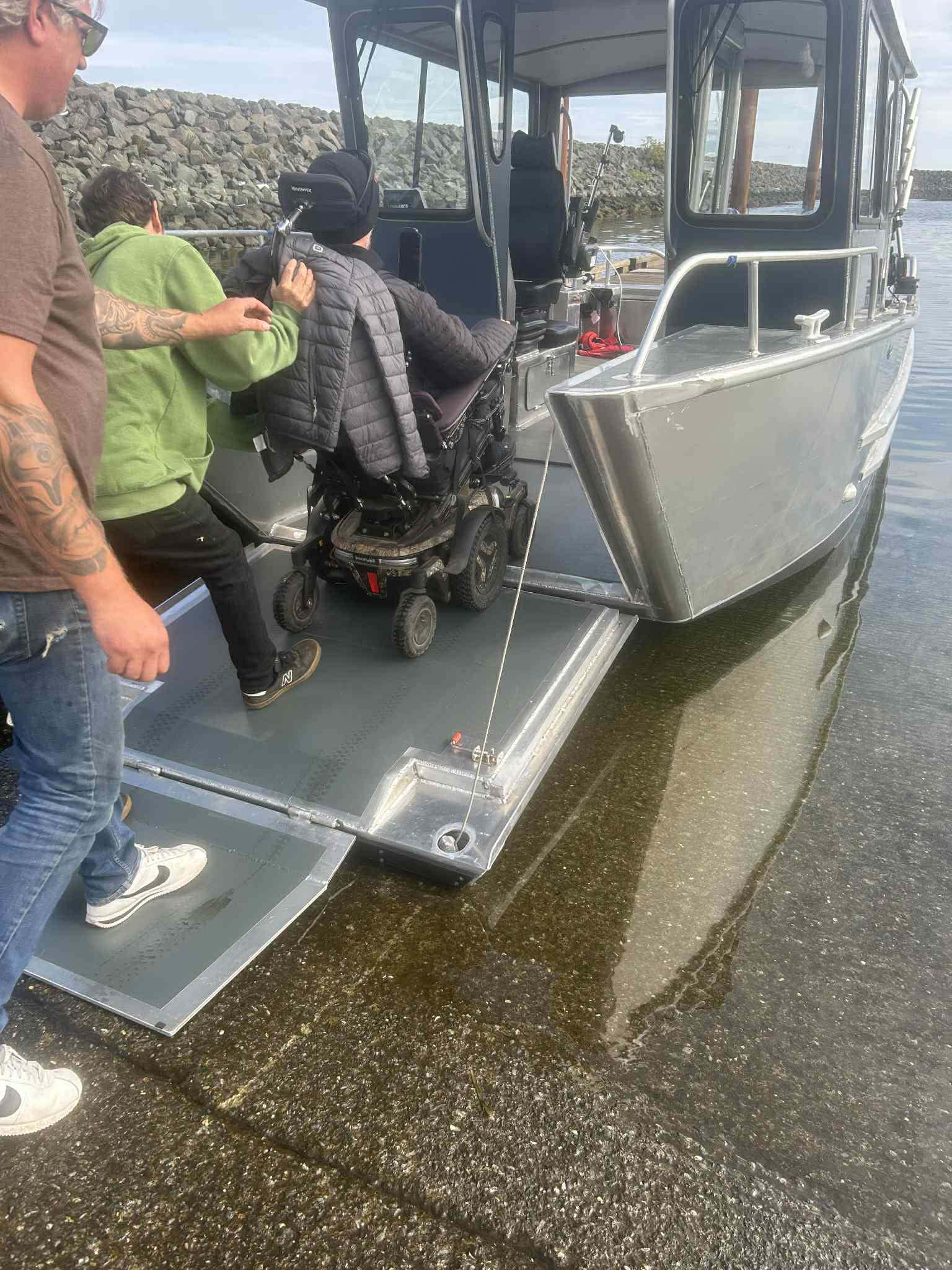
Planning a fishing trip for someone with a spinal cord injury, mobility challenge, or wheelchair use takes more research than a typical booking. This guide walks you through everything — from finding the right charter to packing the right gear — so the day goes smoothly and everyone has a great time.
Who This Guide Is For
- Spouses, partners, or family members planning a gift or surprise trip
- Caregivers or support workers organizing a recreational outing
- Rehabilitation teams looking for adaptive recreation options
- Friends who want to get their buddy back on the water
- Anyone booking on behalf of someone with a mobility challenge
Step 1: Find the Right Charter
Not all "accessible" charters are equal. Many boats claim accessibility but can't actually accommodate a wheelchair safely. Here's what to look for:
Questions to Ask Before Booking
How does the wheelchair user board the boat?
You want a ramp or level dock transfer — not being lifted or carried.
What is the deck layout?
An open, flat deck with room to maneuver. Tight walkways between seats won't work.
Do you have wheelchair tie-downs?
The chair needs to be secured while underway. Straps or clamps are essential for safety.
What is the weight capacity of the ramp?
Power wheelchairs can weigh 200+ lbs. The ramp needs to handle combined weight.
Is there an accessible washroom?
For a 4-5 hour trip, this matters. Know what's available before you go.
Does the crew have experience with wheelchair users?
Experience matters. A crew that's done it before knows how to help without being asked.
Can you send photos of the boarding area and deck?
Photos don't lie. If they can't show you the setup, be skeptical.
The Difference with Purpose-Built
Most accessible charters are standard boats with some modifications. Wheelin N Reeling is different — our vessel was designed and built from scratch for wheelchair users. The ramp, the deck layout, the tie-down points, the open space — it's not an afterthought. It was the whole point. That's the difference between "we can accommodate" and "we were built for this."
Step 2: Communicate Needs Clearly
When you book, give the charter as much information as possible. Don't assume they'll know what you need. Be specific:
Wheelchair Details
- Manual or power
- Width and length
- Weight (chair + person)
- Folding or rigid frame
Physical Needs
- Level of injury / mobility
- Transfer assistance needed
- Hand function / grip strength
- Temperature sensitivity
Medical
- Medications on board
- Catheter / bowel routine timing
- Autonomic dysreflexia risk
- Allergies
Logistics
- Number of companions
- Arrival time flexibility
- Accessible vehicle parking
- Pickup / drop-off needs
Step 3: Packing Checklist
Essentials
- Warm layers (windproof outer)
- Sunscreen (SPF 50+)
- Sunglasses with strap
- Hat / cap
- Medications
- Catheter supplies (extra)
- Pressure relief cushion
- Waterproof bag for valuables
Nice to Have
- Camera / GoPro
- Gloves (fingerless for grip)
- Snacks you prefer
- Anti-nausea medication
- Hand warmers
- Towel
- Change of clothes (in car)
- Wheelchair rain cover
The charter provides all fishing gear, life jackets, bait, snacks, and refreshments. You don't need to bring fishing equipment.
Step 4: Day-of Logistics
Arrive 15 minutes early
This gives time to get from the parking area to the dock without rushing. The crew can help if needed.
Use the washroom before boarding
Even with an on-board head, it's easier on land. Campbell River's Discovery Harbour has accessible washrooms near the parking area.
Do a pressure relief before boarding
Once on the water, weight shifts are your best option. Start fresh and set a timer for regular reliefs throughout the trip.
Let the crew lead the boarding
They've done this before. They'll position the ramp, guide the wheelchair, and secure the tie-downs. Your job is to roll on and get comfortable.
Speak up during the trip
Cold? Need to shift position? Want to try a different spot on the deck? Just say so. The crew is there to make it work for you.
Step 5: Managing Expectations
For many wheelchair users, this might be their first time back on the water since their injury. That carries a lot of emotion. Here's what caregivers and family should know:
- It might be emotional. Getting back on the water after thinking those days were over is powerful. Give space for that.
- Catching fish is a bonus. The real win is being out there. Don't put pressure on the fishing — the ocean, the wildlife, the wind — that's the experience.
- Let them do as much as they can. Don't over-help. If they want to fight the fish themselves, let them. If they need a hand, they'll ask.
- Take photos. Not just of the fish — of them on the water, looking out at the mountains, laughing with the crew. Those photos will matter more than you think.
Can't Afford a Charter?
Sponsor a Trip Program
If the person you're planning for is on government assistance, disability income, or facing financial hardship, our Sponsor a Trip program may be able to help. Community donations fund fishing trips for people who can't afford them. No complicated applications — just reach out and tell us the situation.
Learn About Sponsored TripsReady to Book?
We've been through this with dozens of families. Call us, tell us about your person, and we'll handle the rest.