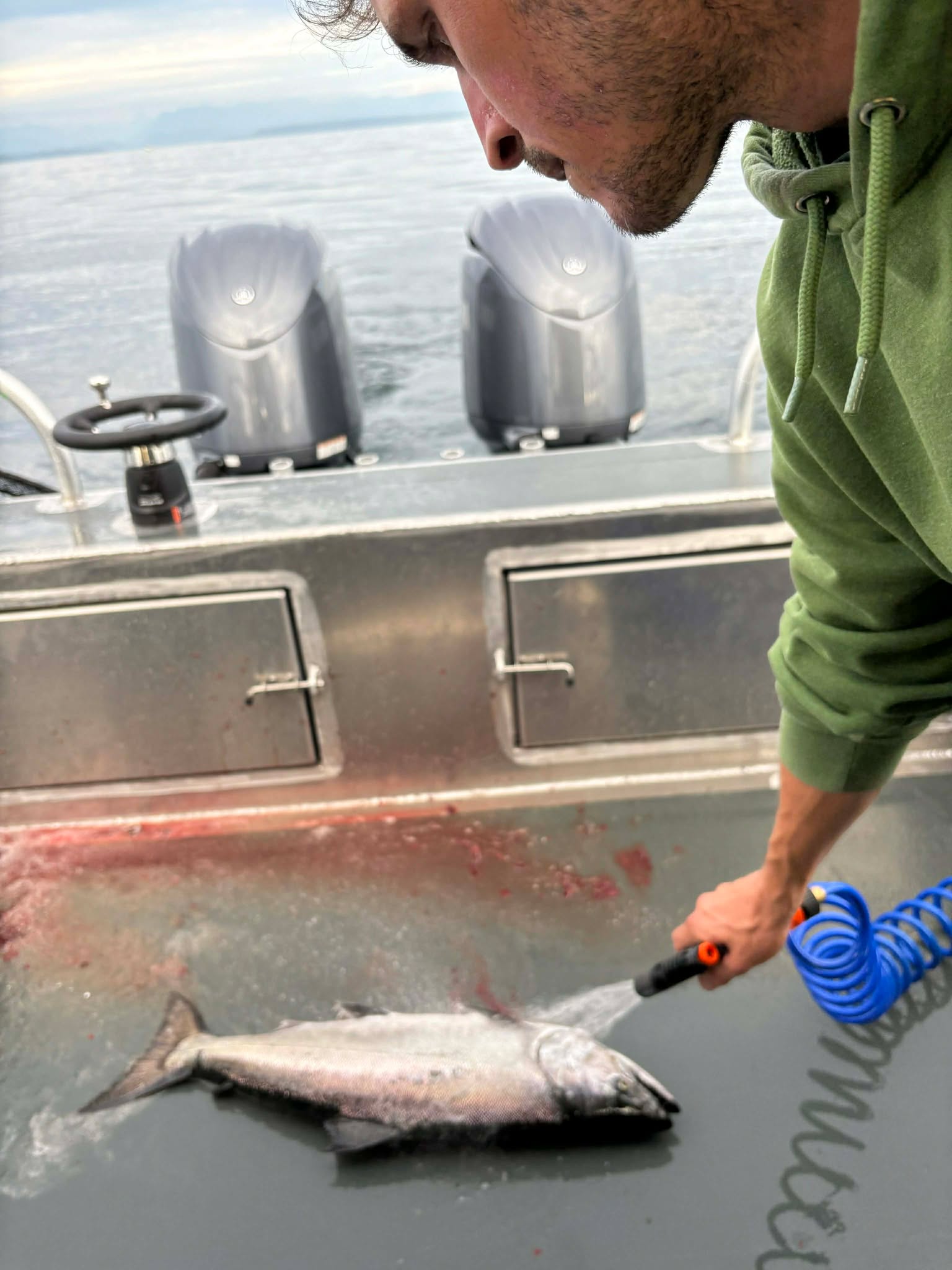
Fishing from a wheelchair is absolutely possible — and with the right setup, it's just as rewarding as it's always been. Whether you're heading out on a charter or fishing from shore, these tips will help you prepare, stay comfortable, and land more fish.
Adaptive Fishing Equipment
Rod Holders
A good rod holder is the single most important piece of adaptive fishing gear. It frees your hands and lets you fight a fish without needing to hold the rod the entire time. Options include:
- Wheelchair-mounted rod holders — clamp to your chair frame, keep the rod within reach
- Belt-style rod holders — strap around your waist, good for casting and jigging
- Boat-mounted holders — on a charter like ours, the rod sits in a gunwale holder while trolling
Electric Reels
For anglers with limited hand strength or grip, electric reels do the heavy cranking. You still feel the fight and control the fish — the reel just handles the grunt work of reeling in. Particularly useful for deep-water fishing where you're bringing up fish from 100+ feet.
Adapted Grips
If you have limited hand function (common with C5-C7 spinal cord injuries), foam grip builds, velcro wrist straps, or custom handle wraps can help you hold the rod securely. Many anglers with quadriplegia use a combination of a rod holder and an adapted grip to fish independently.
Casting from a Wheelchair
Casting seated is different from standing, but it's not harder — just different mechanics.
Side Cast
The most natural cast from a seated position. Swing the rod to the side rather than overhead. Uses your core rotation for power and is easier to control from a wheelchair.
Underhand Flip
For short-distance casting — flip the bait out with an underhand motion. Works well when you're positioned close to the water, like on a boat deck.
One-Handed Cast
If you only have use of one arm, a spinning reel with a trigger grip lets you cast one-handed. Lock the bail, hold the line with your index finger, and flick.
Trolling (No Cast Needed)
On a charter, most salmon fishing is done by trolling — the boat does the work. Your line is already in the water. When a fish hits, you grab the rod and fight it in.
Fishing on an Accessible Charter
Charter fishing is the easiest way to get back on the water after a spinal cord injury or mobility change. The crew handles the technical side — you focus on fishing.
What to Expect on Our Charter
- 1. Roll up the ramp directly from the dock onto the deck — no lifting, no transfers required
- 2. Your wheelchair gets secured with tie-down straps so you're stable underway
- 3. We set up your rod in a holder and get lines in the water as we head to the fishing grounds
- 4. When a fish hits, the crew hands you the rod (or you grab it yourself) and you fight it in
- 5. Crew assists with netting, unhooking, and photos — you keep your hands on the rod
Preparing for Your Trip
Tell the charter about your needs
Wheelchair type, dimensions, power or manual, any transfer needs, medications. The more we know, the better we prepare.
Dress in layers
It's always cooler on the water. Bring a windproof outer layer even in summer. If you have reduced sensation, over-dress — you may not feel the cold until it's a problem.
Plan for skin protection
Sun reflects off water. Apply sunscreen to any exposed skin, especially areas with reduced sensation. A hat and sunglasses are essential.
Manage pressure and positioning
Bring your usual cushion. On a 5-hour trip, do your regular pressure reliefs. Let the crew know if you need repositioning — they'll help.
Bring medications and supplies
Catheter supplies, medications, anti-nausea pills if prone to motion sickness. Pack extra in a waterproof bag.
Ready to Get Back on the Water?
Our vessel was purpose-built for wheelchair users. No compromises, no afterthoughts — just real fishing on a boat designed around your needs.