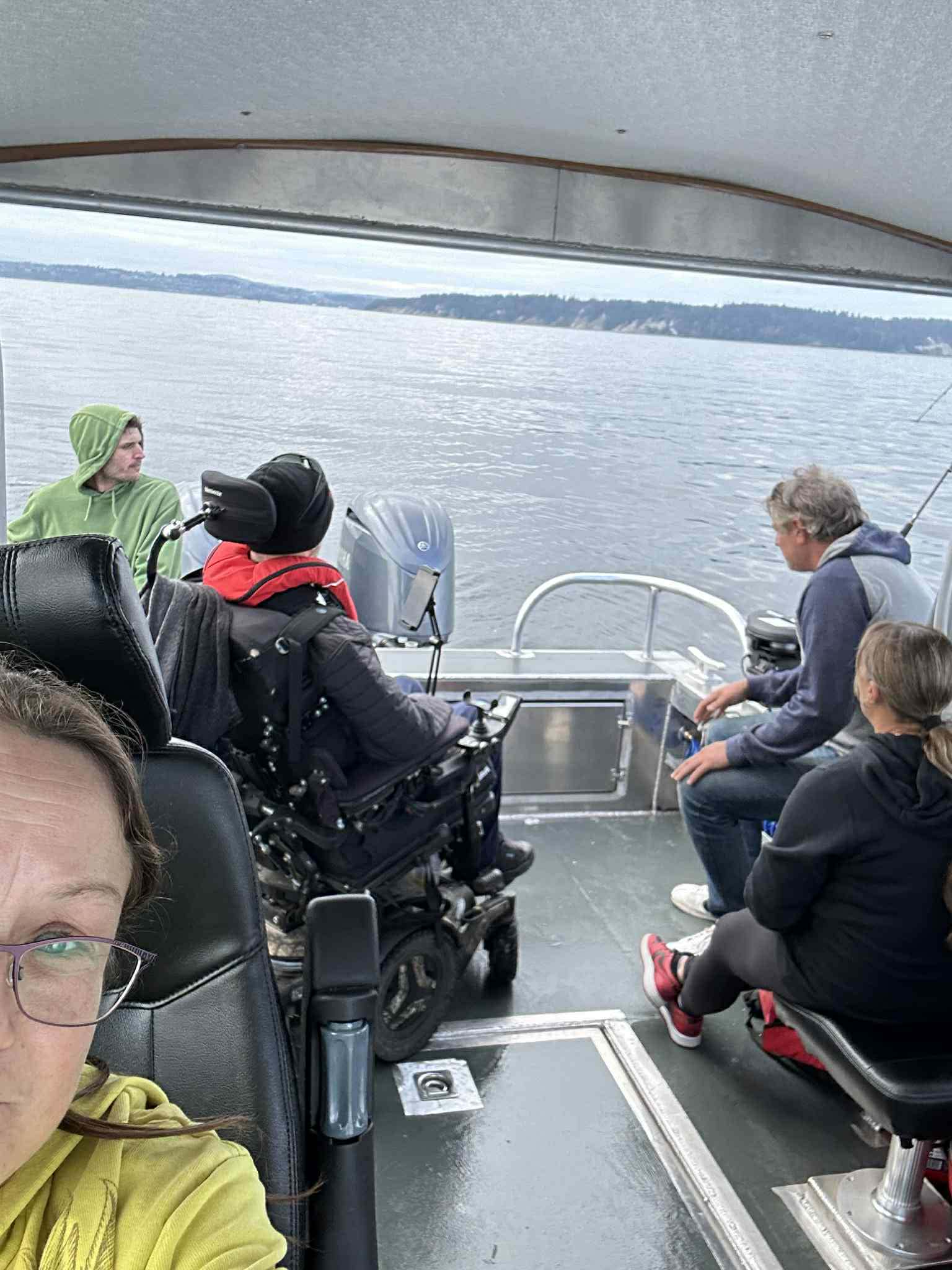
Canada has some of the best whale watching on Earth. From orcas in the Pacific to belugas in the St. Lawrence, these giants are breathtaking to see in person. This guide covers where to find wheelchair accessible whale watching — both on boats and from shore — across every coast.
British Columbia — Orcas, Humpbacks & Grey Whales
Campbell River & Johnstone Strait
One of the best places in the world to see resident orca pods. The Northern Resident orcas travel through Johnstone Strait and Discovery Passage from June through October. Humpback whales have also returned in large numbers.
Our Quadra Island Circumnavigation tour passes through prime whale territory. While we can't guarantee sightings, orcas and humpbacks are frequently spotted along the route. Our accessible vessel means you're watching from an open deck with clear sightlines — not crammed in a cabin.
See Our ToursTofino & Ucluelet
Grey whale migration (March-April) and resident humpbacks (May-October). Several operators run covered boats. Call ahead about wheelchair access — some larger vessels have main-deck access without stairs. Shore watching from the Wild Pacific Trail has some paved sections.
Victoria & Southern Vancouver Island
Southern Resident orcas (spring-fall) plus humpbacks and greys. Some operators run larger catamaran-style vessels with ramp boarding. The Victoria waterfront has paved paths where whales are occasionally visible from shore.
Telegraph Cove
Historic whale watching hub on northern Vancouver Island. The boardwalk village is partially accessible. Whale watching boats vary in accessibility — contact operators directly. The Whale Interpretive Centre has accessible exhibits.
Quebec — Beluga Whales & Blue Whales
Tadoussac & the St. Lawrence
The confluence of the Saguenay and St. Lawrence rivers is one of the most reliable whale watching locations in the world. Belugas, minke, fin whales, and occasionally blue whales — the largest animal on Earth.
- Pointe-de-l'Islet — Paved viewing platform right on the shore. Belugas often come within 50 metres. Free, fully accessible.
- Cap-de-Bon-Desir — Parks Canada site with accessible viewing platforms overlooking deep water where large whales surface close to shore.
- Marine Mammal Interpretation Centre — Accessible museum in Tadoussac with whale skeleton displays and live hydrophone feeds.
Boat Tours from Tadoussac
Larger vessels (100+ passengers) often have main-deck wheelchair access, elevators, and accessible washrooms. Zodiac tours are generally not accessible. Contact operators directly and ask about: boarding method, deck access, washroom, and whether you stay in your chair. The season runs May through October.
Atlantic Canada — Humpbacks & Right Whales
Bay of Fundy, New Brunswick
Home to the critically endangered North Atlantic right whale (June-October), plus humpbacks, minke, and finback whales. Several whale watching operators run from St. Andrews and Grand Manan. Larger vessels may accommodate wheelchairs on the main deck. The Fundy Trail Parkway has accessible lookout points.
Cape Breton, Nova Scotia
Whale watching from Pleasant Bay and Cheticamp. Humpback and pilot whale sightings are common. The Cabot Trail has scenic pulloffs, some with accessible viewing areas. The Skyline Trail boardwalk section is accessible and offers ocean views where whales are sometimes visible from elevation.
Newfoundland
Humpback whales, icebergs, and puffins — sometimes in the same field of view. Witless Bay Ecological Reserve is the prime spot. Some boat operators run larger vessels with flat-deck access. Cape Spear has paved paths to whale watching viewpoints.
Manitoba — Beluga Whales of Hudson Bay
Churchill
Every summer (July-August), thousands of beluga whales gather in the Churchill River estuary. Churchill is also famous for polar bears. Some tour operators offer boat-based beluga watching — check accessibility before booking. The town itself is small and remote, so plan logistics carefully. Some operators offer accessible tundra vehicles for polar bear viewing in fall.
Tips for Wheelchair Whale Watching
Larger vessels are almost always more accessible than zodiacs or small boats
Shore-based watching is underrated — many of Canada's best spots are accessible from land
Bring binoculars — a good pair matters more than being on a boat
Dress warmer than you think, especially on the water. Wind chill on the ocean is brutal
Morning tours tend to have calmer water (less seasickness risk)
Ask operators specifically about wheelchair access — "accessible" means different things to different people
Download a whale identification app so you can identify species on the spot
See Whales from Our Accessible Vessel
Our Quadra Island tours pass through orca and humpback whale territory. Purpose-built for wheelchair users — open deck, clear sightlines, zero barriers.